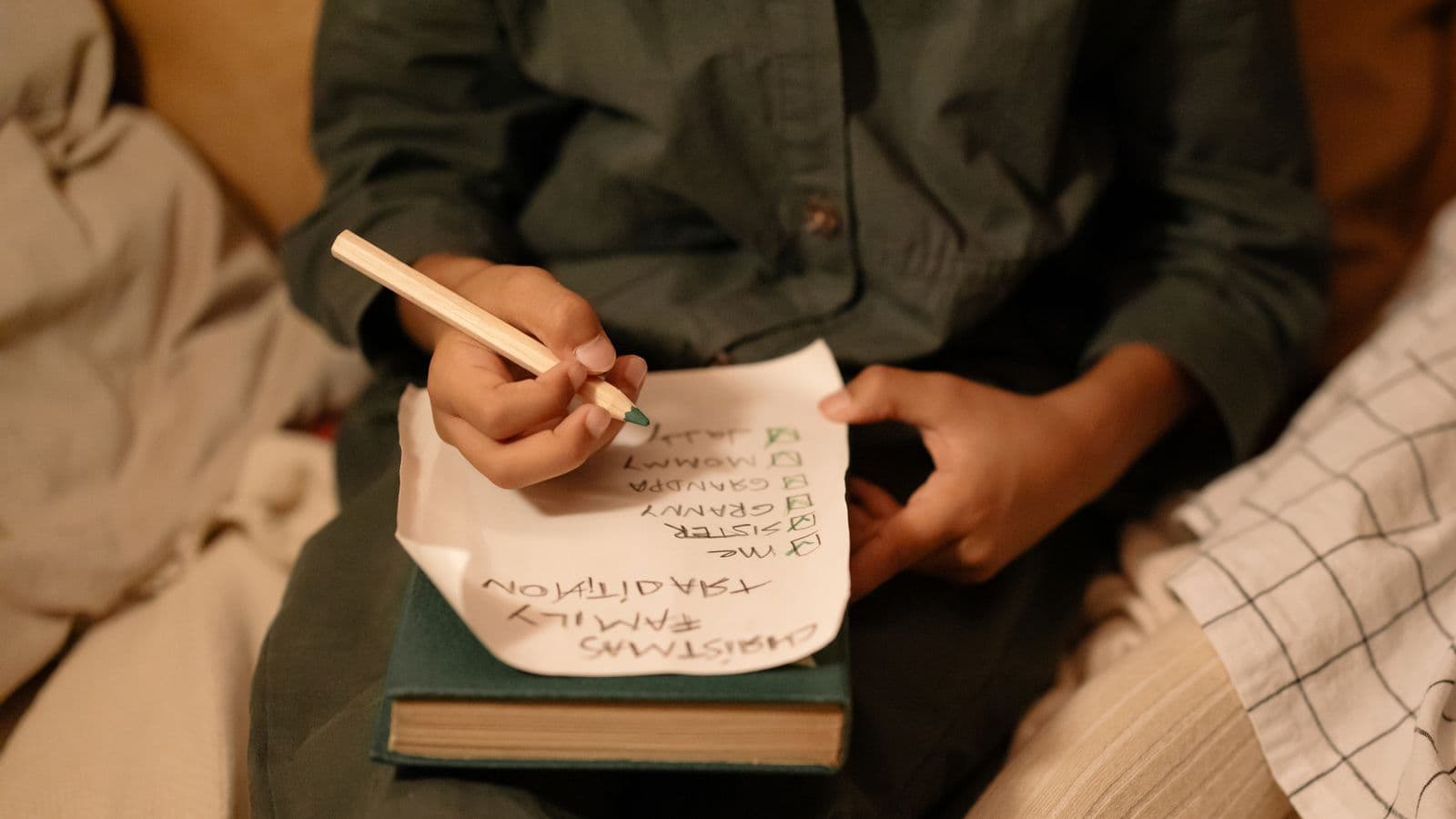
A family gift preference profile relatives can actually use
Every relative who wants to buy well for your kid is working from the same short list of facts — current size, what she's into this month, what she can't have. Most families never write it down in one place, so every gift-giver re-asks, re-guesses, or defaults to a gift card. Here's a free template that holds it all, plus a filled-out example so you can see exactly how to use it.
A gift preference profile and a wishlist solve different problems. A profile describes who the person is — sizes, interests, allergies, things they collect — and barely changes month to month. A wishlist names specific items they want right now, for a specific occasion. Confuse the two and you end up rebuilding one every birthday, or asking relatives to guess from a stale list.
Profile versus wishlist: the core distinction
Here’s the mental model. A wishlist is a shopping list: five or ten items your kid wants for this specific birthday or holiday, gone as soon as the occasion passes. A preference profileis more like a passport: sizes, allergies, favorite colors, what they collect, what they can’t stand — the facts that stay true across several occasions in a row.
The two aren’t competitors. Keep the wishlist for “what does she want this year” and the profile for “what do I need to know about her in general.” When you build out the actual gift list for an occasion — see our full guide to building a kid’s birthday wishlist — you’ll lean on the profile to fill in what the list itself can’t hold: the shoe size for the cleats someone wants to buy, the allergy that rules out a bath-bomb gift set.
Families that keep only a wishlist end up re-explaining the same facts every year: “remember she’s allergic to…”, “he’s a size 7 now, not a 5.” A profile is where that lives permanently, attached to the kid, not to the occasion.
The core template fields
Every profile, regardless of the child’s age, works better with the same seven fields. Keep them short — this isn’t a biography, it’s a cheat sheet.
- Name or nickname.What they’re actually called day to day.
- Age band.A range (5–7, 8–10) ages better than an exact number — you won’t forget to update it the day after a birthday.
- Clothing size, with a date checked. More on why the date matters below.
- Shoe size, with a date checked. Shoe sizes move even faster than clothing.
- Favorite colors. Two or three is plenty.
- Current interests or characters.What they’re into this month — not what they liked last time someone bought a gift.
- Allergies and hard avoidances. Anything a gift genuinely cannot include.
If you’re building this for more than one child in the house, keep a separate profile per kid rather than one combined page — our guide to running a family wishlist with multiple kids covers why one shared list per household gets confusing fast, and the same logic applies to profiles: one profile per child in a shared household.
Optional fields worth adding for kids
Beyond the core seven, a handful of fields are optional but genuinely useful for children specifically — add them if they apply, skip them if they don’t.
- Existing collections.What they already own multiples of, so a well-meaning gift doesn’t duplicate or clash.
- Ordinary dislikes.Not hazards — just things they’ve outgrown or never liked.
- Experience preferences.Whether they’d rather have a ticket or a class than another object.
- Gift-card comfort. Whether gift cards are welcome, and where.
- Please-avoid categories.Noise, mess, screen time — whatever the household has already ruled out.
- Shipping notes. Which address, and any size or space constraints.
These matter even more for relatives buying gifts that have to travel — a grandparent shipping a package across the country can’t eyeball whether it fits a small apartment or clashes with what’s already on the shelf.
Sizes — and when they were last checked
Sizes are the single field most likely to go stale, and the most damaging when they do. A shoe bought a size behind isn’t a near-miss — it’s a gift worn twice and quietly returned, or never mentioned at all because a ten-year-old giver doesn’t want to seem ungrateful.
That’s why the size fields on this template carry a second piece of data: when it was last checked, not just what it currently is. A size without a date is a guess wearing a costume. Update it whenever you notice a growth spurt. As a rule of thumb (not a clinical guideline), we’d treat anything older than three or four months as due for a recheck — sooner for kids under six, who can move up a size within a season.
For relatives who only see the kids a few times a year, the date-checked field is the whole point: it tells them at a glance whether the size in front of them is this month’s truth or last year’s memory.
Allergies, sensitivities, and dislikes
These two categories look similar on a form and behave completely differently, so keep them in separate fields.
Allergies and hard avoidancesare non-negotiable: a food allergy, a latex sensitivity, a sensory issue that makes certain textures unbearable. Write these in plain, unambiguous language — “no tree nuts, including in gift baskets or packaging” rather than just “nut allergy” — because the gift-giver reading it may not think to check a candle’s ingredient list or a lotion set’s scent base.
Ordinary dislikesare preferences, not hazards: doesn’t like glitter, outgrew dinosaurs last spring, already has four stuffed animals and doesn’t want a fifth. These save a relative from an awkward miss, but nobody’s safety depends on getting them right — which is exactly why they belong in their own clearly labeled field instead of blurring together with allergies, where a reader might skim past the one that actually matters.
Collections, compatibility, and duplicates
A surprising number of unusable gifts aren’t bad ideas — they’re just incompatible with what the kid already owns. The third Barbie Dreamhouse. A train set built on a different track system than the one already on the floor. A fifth stuffed dinosaur when the shelf is already full.
Recording what a child currently collects — and which brand or system it’s built on — lets a relative buy the piece that’s actually missing instead of one more of what’s already there. It’s a small field with an outsized return: five minutes writing down “Schleich dinosaurs, has 14, missing a stegosaurus and a spinosaurus” saves an aunt from buying dinosaur number 15.
Experience and non-object preferences
Not every kid wants more stuff, and the profile should have somewhere to say so. If a child lights up more for a trampoline-park pass, a pottery class, or tickets to something than for another toy, write that down as its own field — experience preferences — rather than leaving relatives to keep defaulting to objects because that’s all the profile mentions.
The same goes for gift cards, which some families love and others consider a cop-out. State the preference plainly: welcome or not, and if welcome, to where specifically — a bookstore card lands very differently from a generic department-store one. Round it out with a “please avoid” field for categories the household has already ruled out (noise-makers, slime, anything with a hundred loose pieces), so a relative isn’t left to reverse-engineer the family’s rules from silence.
Privacy review before sharing
Every field on this template is optional, and some — allergies, an address, a school name that slips into shipping notes — are more sensitive than others. Before you share a profile with anyone outside the immediate household, decide field by field what a given relative actually needs. A grandparent buying clothes needs the sizes; they don’t necessarily need the shipping address if the gift is being handed over in person.
We cover this in more depth — including which of these fields to keep private and which are safe to share broadly — in our full guide to kids’ wishlist safety. The short version: treat this template as a menu, not a mandate. Leave any field blank that doesn’t feel right to share.
How often to update the profile
Not everything on the template ages at the same rate, so update it on a schedule that matches each field rather than rewriting the whole thing at once.
- Sizes:our rule of thumb is every 3–4 months, or the moment you notice a growth spurt.
- Interests and characters:a quick check before each gift-giving occasion — these can shift in weeks.
- Collections: update whenever a new one starts or an old one gets retired.
- Allergies, dislikes, shipping notes:these change rarely — revisit once or twice a year, or the moment something actually changes.
The point of splitting fields by how often they change is that nobody has to re-fill the whole form to fix one line. It’s also why this is worth keeping somewhere permanent and attached to the child, rather than retyped into a fresh document every December.
This is a NestList template, not a research-backed standard — it’s the set of fields we’ve found actually gets used, kept short enough that nobody abandons it halfway through.
Copy this template
Here’s the full template, laid out as field-and-notes pairs you can copy into a note, a shared doc, or a profile field by field. Leave anything blank that doesn’t apply, or that you’d rather not share.
| Field | Notes / example |
|---|---|
| Name / nickname | What they’re actually called day to day. |
| Age band | e.g. 5–7, 8–10 — a range, not an exact age. |
| Clothing size (date checked) | Current size, plus the date you last confirmed it. |
| Shoe size (date checked) | Current size, plus the date you last confirmed it. |
| Favorite colors | Two or three, ranked if you can. |
| Current interests / characters | What they’re into this month — shows, hobbies, obsessions. |
| Existing collections | Sets, series, or brands they already own — note the system or brand. |
| Allergies / hard avoidances | Anything a gift must never include — be specific and plain. |
| Ordinary dislikes | Preferences, not hazards — things they’ve outgrown or never liked. |
| Experience preferences | Do they light up more for outings, tickets, or classes than objects? |
| Gift-card comfort | Welcome or not — and if welcome, to where specifically. |
| Please avoid | Categories the family has already ruled out. |
| Shipping notes | Preferred address, and any size or space limits worth knowing. |
To see it in action, here’s the same template filled out for a fictional kid.
Example — not a real child
| Field | Maya, age 7 |
|---|---|
| Name / nickname | Maya (goes by “May”) |
| Age band | 6–8 |
| Clothing size (date checked) | Kids’ 7/8 — checked March 2026 |
| Shoe size (date checked) | US 13 kids — checked March 2026 |
| Favorite colors | Purple, teal |
| Current interests / characters | Dinosaurs, “Ada Twist, Scientist,” roller skating |
| Existing collections | Schleich dinosaur figures — has 14, missing a stegosaurus and a spinosaurus |
| Allergies / hard avoidances | Tree nuts (severe) — no food gifts containing nuts, including baskets |
| Ordinary dislikes | Glitter or sparkly finishes; has plenty of stuffed animals already |
| Experience preferences | Would rather have a trampoline-park pass or skating lessons than another toy |
| Gift-card comfort | Yes — bookstore or the local art-supply shop, not department stores |
| Please avoid | Slime, anything with lots of small loose pieces (little sibling in the house) |
| Shipping notes | Ship to parents’ address, not school; nothing bulkier than a shoebox |
Notice what the filled-out version does that a plain wishlist can’t: it tells a relative shopping cold — a great-aunt, a family friend, a grandparent three states away — everything they’d need to avoid a miss, regardless of which occasion they’re shopping for. That’s the value of a profile over a list. For the specific gift ideas by age to pair with it, see our kids’ birthday wishlist checklist.
Quick answers
What information helps relatives buy gifts?
The stuff that doesn't change week to week: current sizes with the date checked, what they're into right now, allergies and hard avoidances, existing collections, and whether they'd rather have an experience than another object. Save item-specific wants for the wishlist instead.
Should allergies be included in a gift preference profile?
Yes, and kept separate from ordinary dislikes. Write allergies and hard avoidances in plain, specific language — no tree nuts, including in gift baskets — rather than just nut allergy, since gift-givers can't guess what they're not told.
How often should sizes be updated?
Every three to four months, or as soon as you notice a growth spurt — sooner for kids under six, who can move up a size within a single season. Attach the date checked to the size itself so nobody's working from a guess.
What belongs in a favorites profile versus a wishlist?
A profile holds identity-level facts that stay true for months: sizes, interests, allergies, collections. A wishlist holds specific items wanted right now for a specific occasion. Keep both, but don't let one substitute for the other.
A profile like this doesn’t replace the wishlist, the group chat, or the phone call before a big purchase — it just means nobody has to reconstruct the basics from memory every single time. Fill it in once, update the fields that actually change, and every relative who wants to get it right finally has what they need to do it.