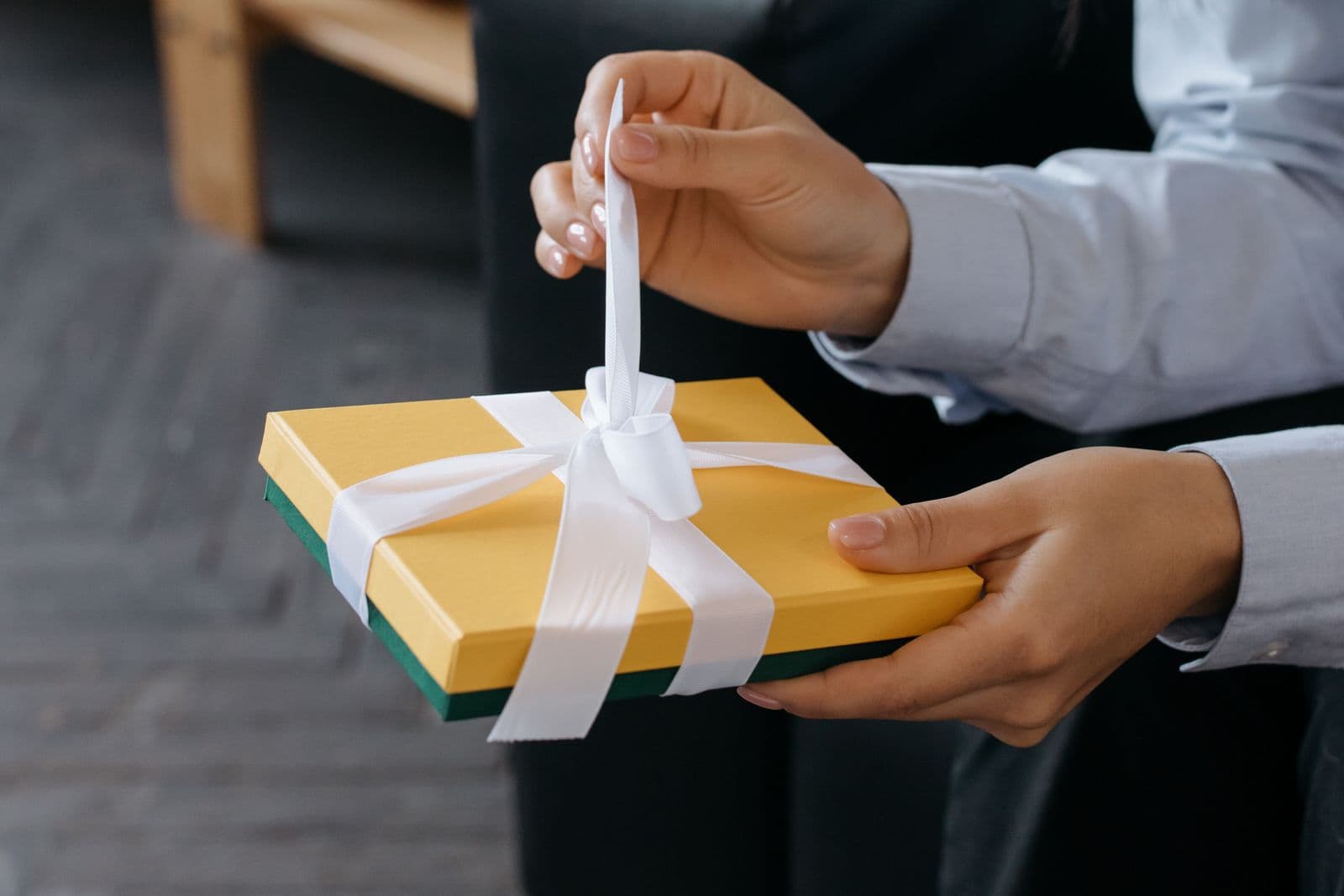
How to remember who gave what gift
Somewhere between the cake and the wrapping-paper blizzard, the gift tags vanish — and by Tuesday nobody can say whether the dinosaur came from Aunt Priya or the neighbors. Here’s the 30-second habit that fixes it, and where to keep the record so the whole family can actually use it.
Every parent has run this sad little forensic exercise: it’s two days after the party, the thank-you cards are out on the table, and you’re holding a robot you cannot attribute. Was it the Patels? Your brother? The tag is long gone; it left in the same trash bag as the wrapping paper. Now you’re choosing between a vague “thanks for the wonderful gift!” and texting three other parents like a detective working a cold case.
The fix isn’t a better memory. It’s a 30-second capture habit during the event, plus one shared place where the record lives afterward. The same system works for Christmas mornings, kids’ birthdays, baby showers, and graduations — whether you run it on paper, a spreadsheet, or an app.
Why “who gave what” evaporates by Tuesday
Almost every lost attribution traces back to one of four things:
- Tags don’t stay attached.Cards get set aside “somewhere safe,” tags ride the wrapping paper into the recycling, and gift bags get reshuffled before the party is even over. The physical link between giver and gift has a lifespan of about ninety seconds.
- The moment is chaos by design.You’re hosting, photographing, refereeing sugar-charged kids, and holding a trash bag, all at once. Nobody’s memory works under those conditions, and unwrapping is precisely when the information appears and disappears.
- Cash and gift cards leave no trail.The twenty from Grandpa goes straight into a pocket; the gift card migrates into a wallet. Months later you can’t recall the amount, which matters, because “thank you for the generous gift” reads very differently from “the $50 went straight into his bike fund.”
- The record lives in one head.One parent “just knows” — until the other parent sits down to write the notes, or runs into Grandma at school pickup, and has to ask. A memory only one person can access isn’t a family record; it’s a liability with a nice smile.
The 30-second habit, in five steps
None of this requires buying anything. It’s one assigned job, five columns, and a place to put them.
1. Appoint a scribe before the first gift is opened
This is the single point of failure in every family’s system: nobody logs during, and reconstructing afternever works. So make it a job. At a baby shower it’s traditionally a friend of the guest of honor; on Christmas morning it’s whoever isn’t playing Santa; at a kids’ party it’s the parent not holding the camera. The scribe writes giver and gift the moment each one is opened. That’s the entire role, and it takes seconds per gift. (If the party hasn’t happened yet, our guide to building a birthday wishlist covers the claiming habit that makes this log mostly automatic.)
2. Log five things, not two
A useful gift log entry has: who, what, occasion and date, amount (for cash and gift cards), and a thank-you-sent checkbox. The checkbox is the column people skip and the one that matters most: it’s what turns a list into a to-do you can actually finish. And you don’t need to buy a printable. Draw five columns on the back of the party checklist (Who / What / Occasion & date / Amount / Note sent?) and you’ve just made one.
3. Use the photo trick when writing isn’t possible
If even a notebook is too much mid-chaos, do this instead: photograph each gift next to its card or tag before they separate. It costs two seconds, your phone timestamps everything, and you can transcribe the lot into your log that evening with a cup of tea. It’s also the move at events you don’t control: when your kid comes home from a friend’s party with a gift, snap it with the tag before it crosses the threshold.
4. Catch the gifts no registry will
If you’re working a wedding or shower registry, the registry already records anything bought through it; that part is handled for you. What slips through everywhere is the off-registry layer: cash, checks, the group gift from six coworkers, the quilt that arrived with no card, the late package that shows up a month after the day. Those go in the same log, with the same checkbox and the contributors listed by name. And for the occasions that have no registry at all — birthdays, Christmas, graduations — the log is the registry.
5. Move it somewhere shared within a day
Paper is the right capture tool and the wrong home. By bedtime, the scribe’s sheet (or your camera roll) should land somewhere both parents (and ideally the far-flung relatives who ask) can open it. That’s also where the long game starts: a running household gift history tells you what Grandma gave last year, stops you from thanking the same person twice, and saves you from the cardinal sin of regifting something back to the person who gave it. It’s the same shared record that stops you double-buying in the other direction.
Paper, spreadsheet, or app — where each one breaks
Every method ranks somewhere on two axes: how fast it captures, and how well it keeps. Here’s the honest version:
| Approach | Captures in the moment? | Where it breaks |
|---|---|---|
| Printable or scrap-paper log | Best: the fastest thing to scribble on mid-party | Gets lost between occasions; only one person ever has it |
| Dedicated gift logbook | Good, and it builds year-over-year history | Lives in one drawer in one house, invisible to the other parent, let alone grandparents |
| Google Sheet | Clumsy; typing into cells one-handed at a party is misery | Fine as the permanent home; bad as the capture tool. Pair it with paper or photos |
| Single-user gift-log app | Yes, if its owner remembers it exists | The record is locked to one phone — the one-head problem, digitized |
| Shared family gift list | Yes — claims and purchases become the record automatically | Only works if everyone can open it without creating an account |
The pattern is consistent: tools that are great at capture are bad at keeping, and vice versa. The winning combination is always fast capture (paper or photos) feeding one shared home.
How NestList helps
NestList is a shared family wishlist, which means much of the gift log writes itself:
- Claimed and purchased gifts are already attributed.When relatives claim and buy from someone’s list, who-gave-what gets recorded as a side effect — no scribe required for those gifts. (Off-list surprises still need your 30-second habit.)
- Thank-you tracking is built in. Every gift carries a thank-you status (the checkbox column, automated), and you can attach a photo of the gift in action, which far-away givers treasure.
- Group gifts list every contributor, so you thank all six people who chipped in, not just whoever’s name ended up on the box. (Money never moves through NestList — families settle up however they already do.) See our guide to organizing a group gift for a child for the full process, receipts included.
- The whole household sees the same record. Profiles carry sizes, allergies, and addresses; a year-round calendar keeps the next occasion from ambushing you; and long-distance grandparents open it all from one private link, no account needed.
A gift log one person keeps is a memory aid. One the whole household can open is a system. The test is simple: when the other parent sits down to write thank-you notes, do they need to ask you anything?
Quick answers
How do you keep track of who gave what gift at a shower or birthday party?
Assign a scribe before the first gift is opened — one person whose only job is writing down giver and gift as each is unwrapped. If writing’s impossible mid-chaos, photograph each gift next to its card before they separate. Either way, capture during the event; reconstructing afterward from memory and a bag of loose tags almost never works.
Is there an app that remembers who gave you what gift?
Yes — there are several single-user gift-log apps, and a shared note or spreadsheet works too if you update it in the moment. The catch is almost always sharing: most tools keep the record on one person’s phone. A shared family wishlist like NestList records who claimed and bought each gift automatically, with thank-you status both parents can see.
How long do you have to send a thank-you note after receiving a gift?
Within two weeks is the comfortable norm for birthdays and holiday gifts; etiquette guides give new parents and newlyweds up to three months. But late beats never, every time — a warm, specific note in March still lands. The real job of a gift log isn’t enforcing a deadline; it’s making sure nobody gets accidentally skipped.
Nobody starts a gift log because they love admin. You start one because “thank you for the lovely gift” is what you write when the tag is gone — and “she’s worn the rainbow socks every single day this week” is what you write when it isn’t. Thirty seconds at the party buys you that sentence, and the person who chose the socks gets to know they chose right.